
Pool Tile & Coping: Finishing Your St. Petersburg Resurfacing Project Right

Riptide Pool Services, Inc. Call 727-215-8475
When you resurface a pool, tile and coping deserve just as much attention as the new interior finish. Waterline tile protects and defines the upper edge of the pool, while coping protects the shell-to-deck transition, improves safety, and completes the appearance of the renovation.
For a typical St. Petersburg pool, replacing waterline tile may add approximately $2,400–$7,600, while coping replacement may add roughly $2,900–$8,600, depending on the pool’s size, demolition requirements, materials, and design. A combined resurfacing, tile, and coping project commonly takes 2–4 weeks when there are no major structural surprises.
Riptide Pool Services has more than 20 years of experience serving St. Petersburg, Clearwater, and the wider Tampa Bay area. We help residential and commercial pool owners plan renovations that are attractive, durable, and properly sequenced from demolition through startup.
Why Replace Pool Tile and Coping During Resurfacing?
Pool resurfacing already requires the pool to be drained, prepared, and taken out of service. That makes it the most practical time to address aging tile and coping.
Replacing these elements later may require another drain, another construction schedule, and additional labor. Coordinating the work during one pool renovation can make the overall project more efficient and produce a more cohesive result.
Waterline tile provides more than decoration
Waterline tile is the band installed around the inside perimeter of the pool, usually near the normal water level. It helps create a clean transition between the pool finish and the surrounding air while making the waterline easier to maintain.
New pool tile can:
- Refresh the appearance of an aging pool
- Cover cracked, loose, or outdated tile
- Make waterline cleaning easier
- Coordinate with a new plaster, quartz, or pebble finish
- Add color, contrast, or a resort-style design element
Coping protects the pool edge
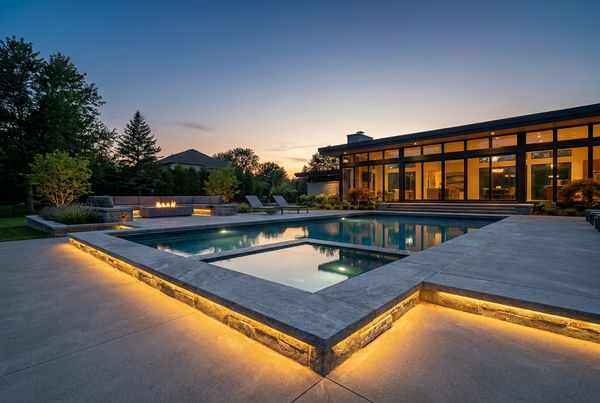
Coping is the material installed around the top perimeter of the pool. It covers and protects the shell edge, creates a transition to the deck, and provides a finished surface for swimmers entering and exiting the pool.
Cracked, shifting, or poorly bonded coping can allow water to move into areas where it may contribute to deterioration. It can also create sharp edges and trip hazards.
What Pool Tile Should You Choose?
The best pool tile depends on your budget, maintenance preferences, architectural style, and the finish selected for the pool interior.
Ceramic and porcelain tile
Ceramic and porcelain remain popular choices for residential waterline tile because they offer broad design flexibility and practical pricing.
They are available in:
- Solid colors
- Stone-look patterns
- Geometric designs
- Mosaic borders
- Coordinated step and spa accents
Porcelain is especially popular for homeowners who want a durable, low-maintenance surface with a clean, modern appearance.
Glass tile
Glass tile creates vivid color and reflective depth, particularly when sunlight moves across the pool. It is often used for decorative bands, raised spas, steps, water features, and premium waterline designs.
However, glass tile typically costs more than standard ceramic or porcelain. Intricate mosaics also require additional layout and installation time.
Natural stone-look and specialty tile
Some homeowners in St. Petersburg and Clearwater prefer tile that complements travertine, pavers, tropical landscaping, or a natural-stone coping selection. The tile does not have to match the coping exactly, but the colors and textures should work together.
The right design is usually coordinated with the entire backyard rather than selected in isolation.

How Much Does Pool Tile Cost in St. Petersburg?
For many standard residential pools, waterline tile replacement costs approximately $2,400–$7,600. A simpler project with standard tile and straightforward access may fall near the lower end. Larger pools, intricate layouts, extensive demolition, premium glass tile, and repairs behind the old tile can increase the total.
A practical planning range for a typical pool is:
- Standard ceramic or porcelain waterline tile: approximately $2,500–$6,000
- Premium glass, mosaic, or specialty tile: often above the standard range
- Full interior tile installation: commonly $25–$35 per square foot or more
Most homeowners do not need to fully tile the interior of a residential pool. A new waterline band, coordinated step tile, and carefully selected accents can create a significant visual transformation without the cost of a full tile finish.
Your estimate should identify the tile material, waterline height, linear footage, demolition, substrate preparation, grout, and any repair allowance.
Which Coping Material Is Best?
Coping should complement the pool deck, home exterior, landscaping, and desired level of maintenance. It should also provide a comfortable, stable edge for everyday use.
Concrete coping
Concrete coping is a practical choice for homeowners who want a clean appearance and a controlled budget. It can be poured, formed, colored, or textured to coordinate with the surrounding deck.
Brick coping
Brick offers a traditional appearance and can work especially well with older homes or classic pool designs. The color and joint pattern should be selected carefully so the coping does not visually overpower the pool finish.
Paver coping
Paver coping provides flexibility in color, pattern, and future repair. Individual units can often be replaced more easily than a continuous material if damage occurs.
Travertine and natural stone
Travertine and natural stone provide an elevated, resort-like appearance that many Tampa Bay homeowners prefer. They can bring warmer tones and distinctive texture to a pool renovation, but material and installation costs are usually higher.
For a typical 80–100 linear-foot pool perimeter, coping may cost approximately:
- Concrete or brick: $3,500–$6,000
- Paver coping: $4,000–$7,000
- Travertine or natural stone: $5,000–$10,000 or more
The final price depends on the perimeter shape, demolition, substrate condition, material thickness, cuts, corners, access, and how the coping transitions into the deck.
What Is the Correct Order for Tile, Coping, and Resurfacing?
Sequence matters. A typical pool renovation follows a process similar to this:
- Drain and inspect the pool. The shell, old finish, tile, coping, fittings, steps, and benches are evaluated.
- Remove failing materials. Loose tile, deteriorated coping, and unsound interior material are removed.
- Complete necessary repairs. Cracks, hollow areas, damaged edges, fittings, and other discovered problems are addressed.
- Install new coping. The perimeter is set, aligned, and allowed to cure according to the material and installation requirements.
- Install new pool tile. The waterline tile is laid out, bonded, grouted, and checked for consistent elevation.
- Apply the new interior finish. Plaster, quartz, pebble, or another finish is installed after the surrounding work is ready.
- Fill and complete startup. The pool is refilled, equipment is inspected, and the water chemistry and finish startup process are managed.
Tile and coping should not simply be treated as cosmetic add-ons. Their elevations, transitions, joints, and drainage relationships all affect the finished pool.
How Long Does a Tile and Coping Renovation Take?
A combined pool resurfacing project with tile and coping generally takes 2–4 weeks in the St. Petersburg area, although weather, material availability, access, structural repairs, and inspection requirements can change the schedule.
A typical breakdown may include:
- Drainage and preparation: 1–3 days
- Tile and coping demolition: 1–3 days
- Coping installation: 2–4 days
- Waterline tile installation: 2–4 days
- Interior resurfacing: 2–5 days
- Refill and startup: 2–5 days
A straightforward project may move faster. A larger pool renovation involving deck work, plumbing, lighting, equipment, or structural repairs may take considerably longer.

How Can You Plan a Better Pool Renovation?
Before signing a proposal, ask for an itemized scope that separates the major elements of the work.
Look for:
- Pool finish type and manufacturer
- Waterline tile material and quantity
- Coping material and linear footage
- Demolition and disposal
- Shell preparation and repair allowances
- Deck protection and cleanup
- Startup and water-balancing service
- Warranty terms
- Estimated downtime
It is also wise to decide on tile and coping before demolition begins. Once the old materials are removed, changes can delay the project and create avoidable material or labor costs.
For a broader overview of St. Petersburg pricing, finish options, and renovation factors, read our guide to How Much Does Pool Resurfacing Cost in St. Petersburg, FL in 2026?.
Riptide can also help coordinate the broader scope through our pool renovation and resurfacing services, including tile, lighting, equipment considerations, and complete pool system improvements.
Finish Your St. Petersburg Pool Renovation Correctly
A new pool finish can improve the water’s appearance, but the tile and coping complete the renovation from the waterline outward. When these elements are selected carefully and installed in the proper sequence, the result is more cohesive, comfortable, and durable.
Riptide Pool Services brings more than two decades of Tampa Bay experience to residential and commercial pool projects in St. Petersburg, Clearwater, and surrounding communities. From meticulous preparation to transformative finishing work, our team is well-equipped to help you evaluate the right scope.
Special Deal! If your renovation also includes a new pool heater, ask about Riptide’s current $100 off new heaters offer.
Request a pool renovation consultation or call 727-215-8475.
Pool Tile and Coping FAQ
Can I resurface my pool without replacing the tile?
Yes. Existing tile may remain if it is properly bonded, free of major cracks, and compatible with the new design. However, loose, damaged, stained, or outdated tile is often more economical to replace while the pool is already drained.
Is coping included in pool resurfacing?
Not always. Basic resurfacing usually covers the interior finish only. Coping replacement, tile, deck work, lighting, and equipment upgrades should be listed separately in the estimate.
How much does pool resurfacing with tile and coping cost?
A typical St. Petersburg project with a new interior finish, waterline tile, and mid-range coping may fall approximately between $10,000 and $25,000, assuming no major structural repairs. Premium materials, larger pools, and expanded renovations can exceed that range.
How long does new pool tile last?
The service life depends on tile quality, installation, water chemistry, exposure, and maintenance. Properly installed ceramic, porcelain, and glass tile can provide many years of service, but grout and bonding should be inspected if cracking, hollow sounds, or recurring waterline damage appears.
Should I choose tile and coping before resurfacing starts?
Yes. Final selections should be made early so the contractor can confirm availability, elevations, transitions, and compatibility with the planned pool finish. This helps keep the project organized and reduces last-minute changes.